
When to Fertilize Your Lawn in Ohio: A Seasonal Schedule for NW Ohio
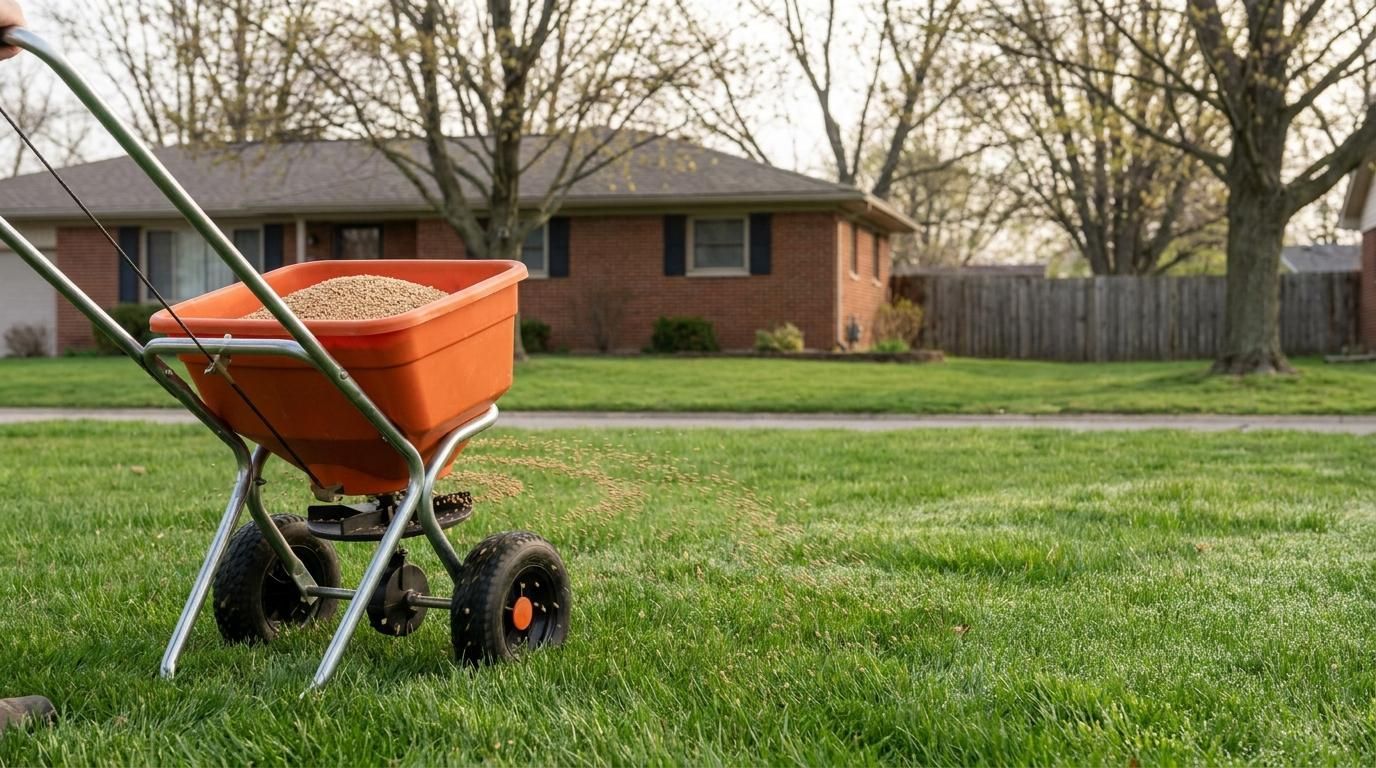
Northwest Ohio cool-season lawns need four to five fertilizer feedings a year, timed to soil temperature and grass growth rather than the calendar on the back of the bag. The first round goes down with a pre-emergent in early April; the last is a winterizer in mid-October to early November. Stuckey's Curb & Landscape times lawn feedings around Holland and Maumee as part of its landscape design and maintenance work, so each one lands when the roots are actually growing instead of during summer dormancy.
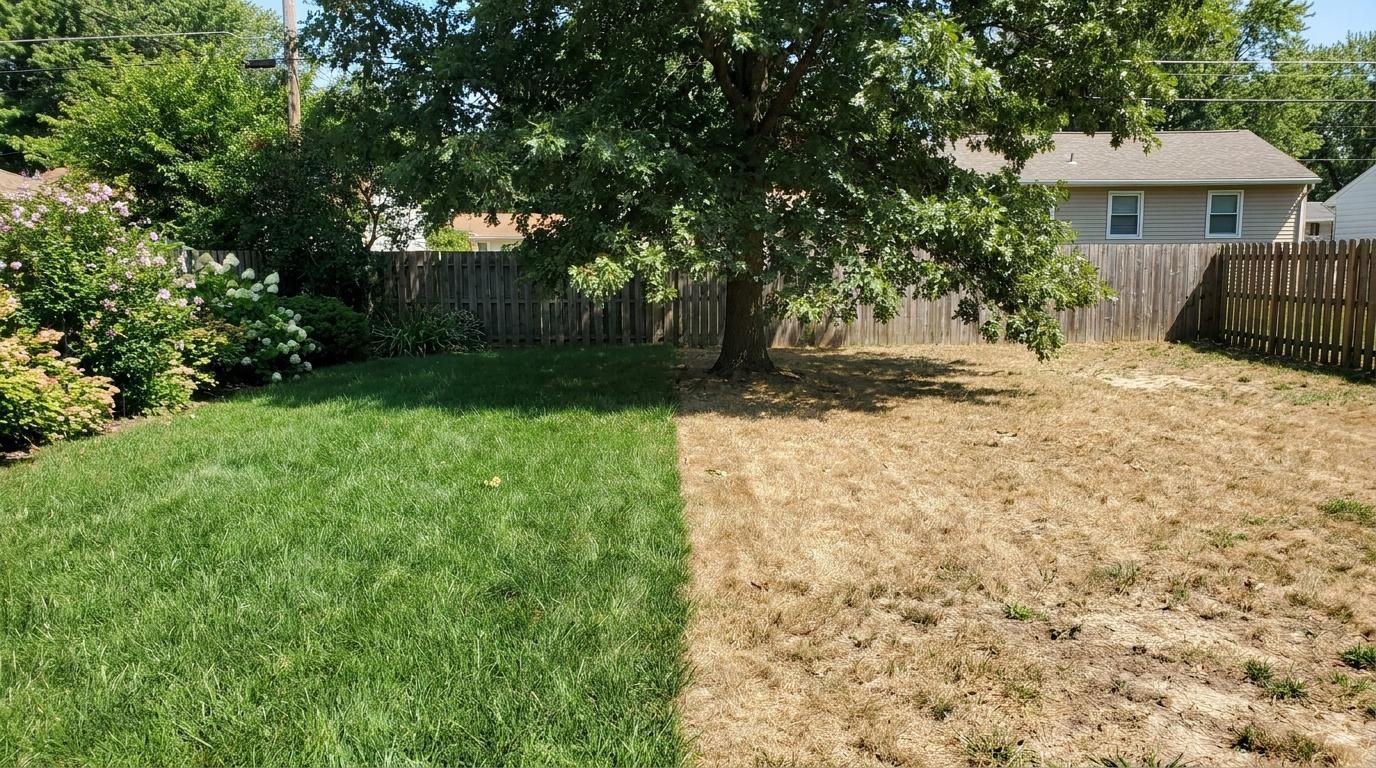
Mid-June is when most homeowners ask us about fertilizer schedules, because the spring color has faded and the bag says "feed every six weeks." For Ohio clay, the bag is wrong: cool-season grass becomes semi-dormant in July heat. Feeding stressed turf burns it instead of helping. In this post, we outline the five feedings local gardens need, why the box-store schedule misses, why a soil test pays off, and how to read an N-P-K bag for an Ohio lawn.
The Five-Step Fertilizer Calendar for Northwest Ohio Lawns
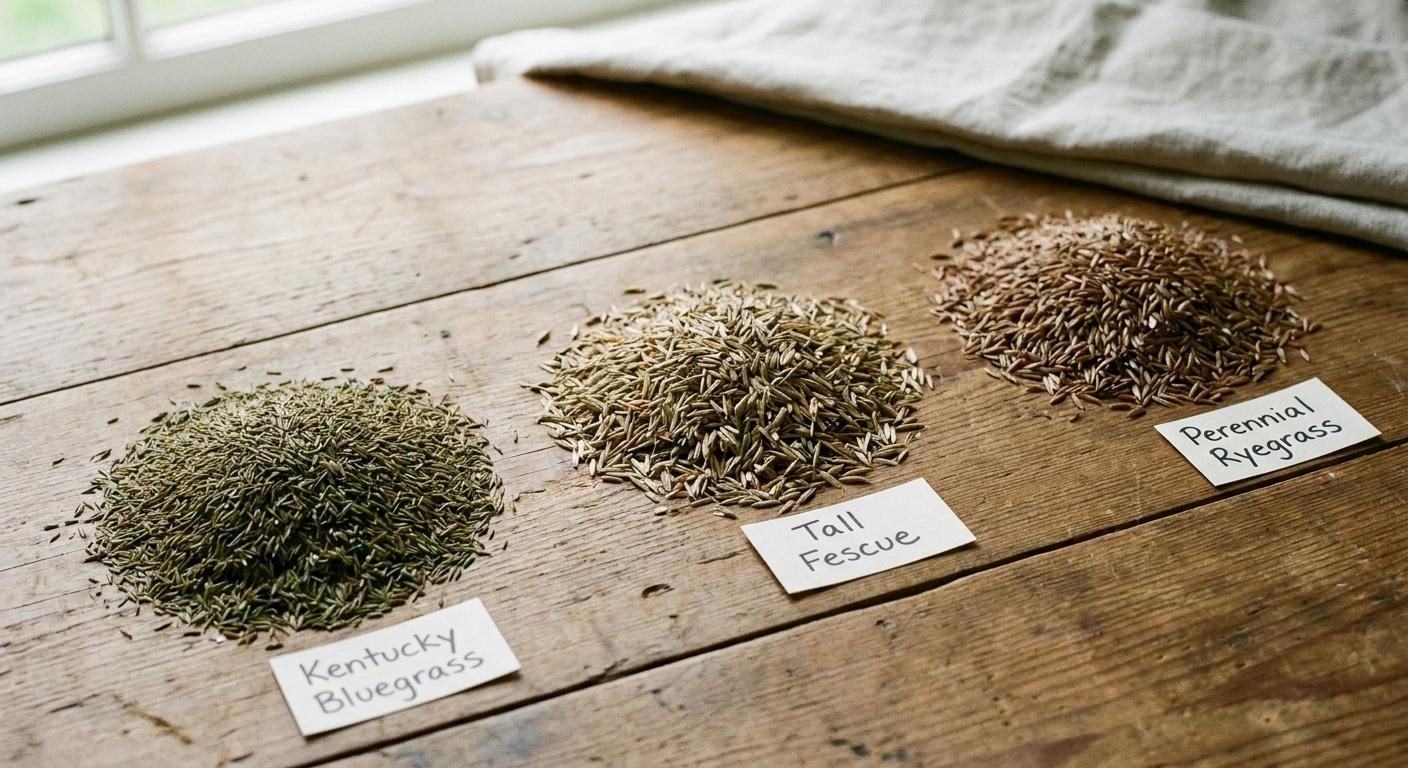
The schedule below covers Kentucky bluegrass, tall fescue, and perennial ryegrass blends, the cool-season mix that dominates Northwest Ohio lawns. Soil-temperature thresholds beat fixed dates, but the typical Toledo windows are listed for planning.
| Application | Timing | Job |
|---|---|---|
| 1. Early spring | Late March to mid-April | Pre-emergent for crabgrass plus light nitrogen feed |
| 2. Late spring | Mid-May to early June | Balanced nitrogen feed to support spring growth |
| 3. Summer (optional) | Late July, only if irrigating | Light slow-release feed; skip on dry, unirrigated yards |
| 4. Early fall | Late August to mid-September | Recovery feeding plus overseeding window |
| 5. Winterizer | Mid-October to early November | High-potassium winterizer to build root reserves |
Why Schedules on the Bag Don't Match Ohio Clay
The four-step plans printed on most box-store fertilizer bags were built around national averages and warm-season grasses, neither of which apply in Northwest Ohio. Cool-season grass enters semi-dormancy when soil temperatures climb past 75°F, which usually happens by early July in Toledo. Feeding nitrogen into a dormant lawn forces top growth the roots can't support, which scorches the blades and invites disease. Clay soil also holds nitrogen and phosphorus longer than sandy loam, so the same dose moves through the root zone at half the rate of a bagged plan written for, say, Texas Bermuda lawns.
The full April-and-May feeding sequence fits inside the broader spring lawn care schedule for Ohio yards, which lists fertilizer alongside dethatching, overseeding, and the first mow.
Get a Soil Test Before You Buy a Single Bag
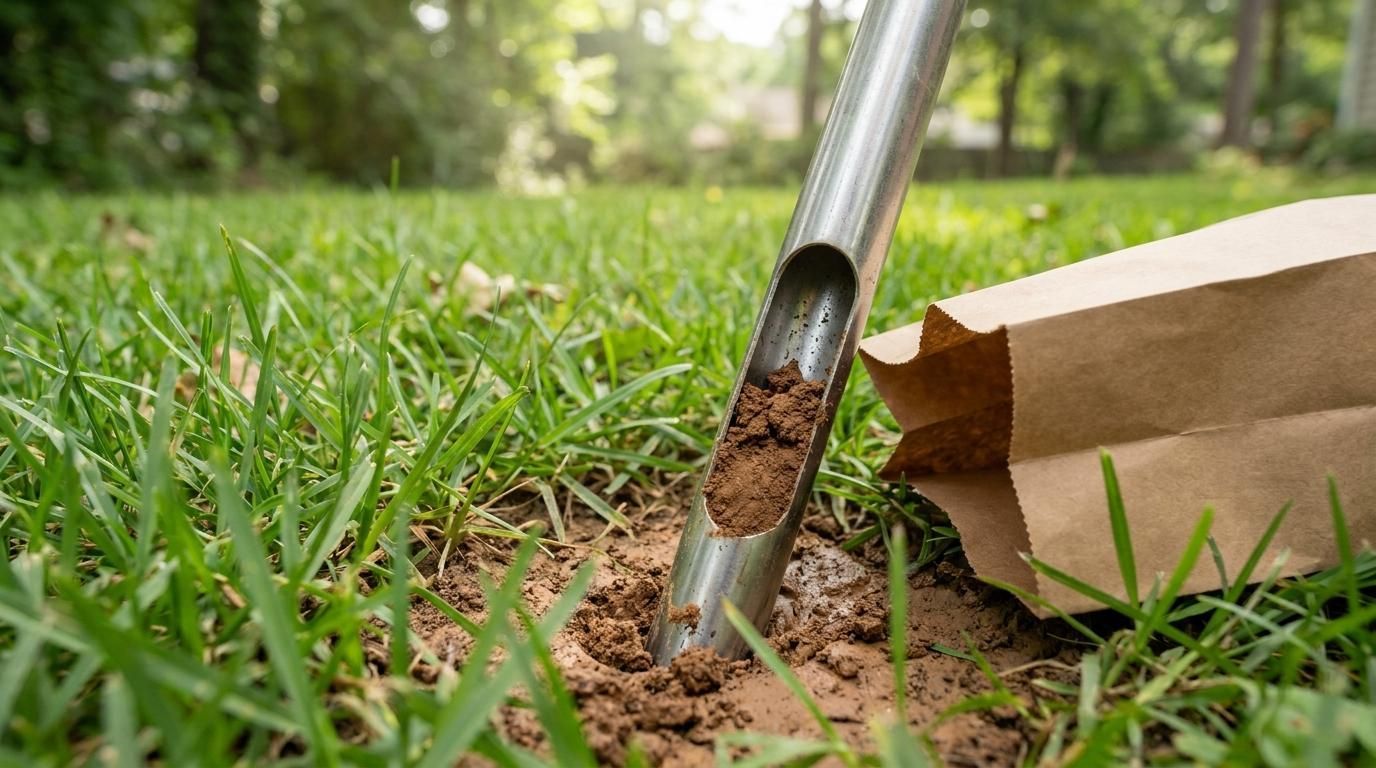
A soil test from the OSU Extension lab runs about $15 to $30 per sample and answers two questions the bag never can: what your pH actually is, and which nutrients your lawn is already short on. Northwest Ohio clay tends to test slightly acidic with adequate potassium and frequent iron and magnesium deficiencies, which a generic 30-0-4 spring feed won't correct. The test takes about three weeks to come back, so pull samples in February if you want results in hand before the April pre-emergent window opens. Two soil cores from three to four spots in the yard, mixed in a clean bucket, give a representative read.
How to Read a Fertilizer Bag for an Ohio Lawn
The three big numbers on the bag are the N-P-K ratio: nitrogen, phosphorus, and potassium. Northwest Ohio cool-season lawns need a higher first number in spring and a higher third number in fall. A balanced spring feed lands somewhere around 30-0-4 with a pre-emergent built in; a fall winterizer lands closer to 12-0-25 to push root storage ahead of frost. Slow-release nitrogen (SCU or polymer-coated urea) outperforms fast-release on clay because it meters the nutrient out over six to eight weeks instead of hitting the lawn in one surge. If the bag doesn't say slow-release, it's quick-release.
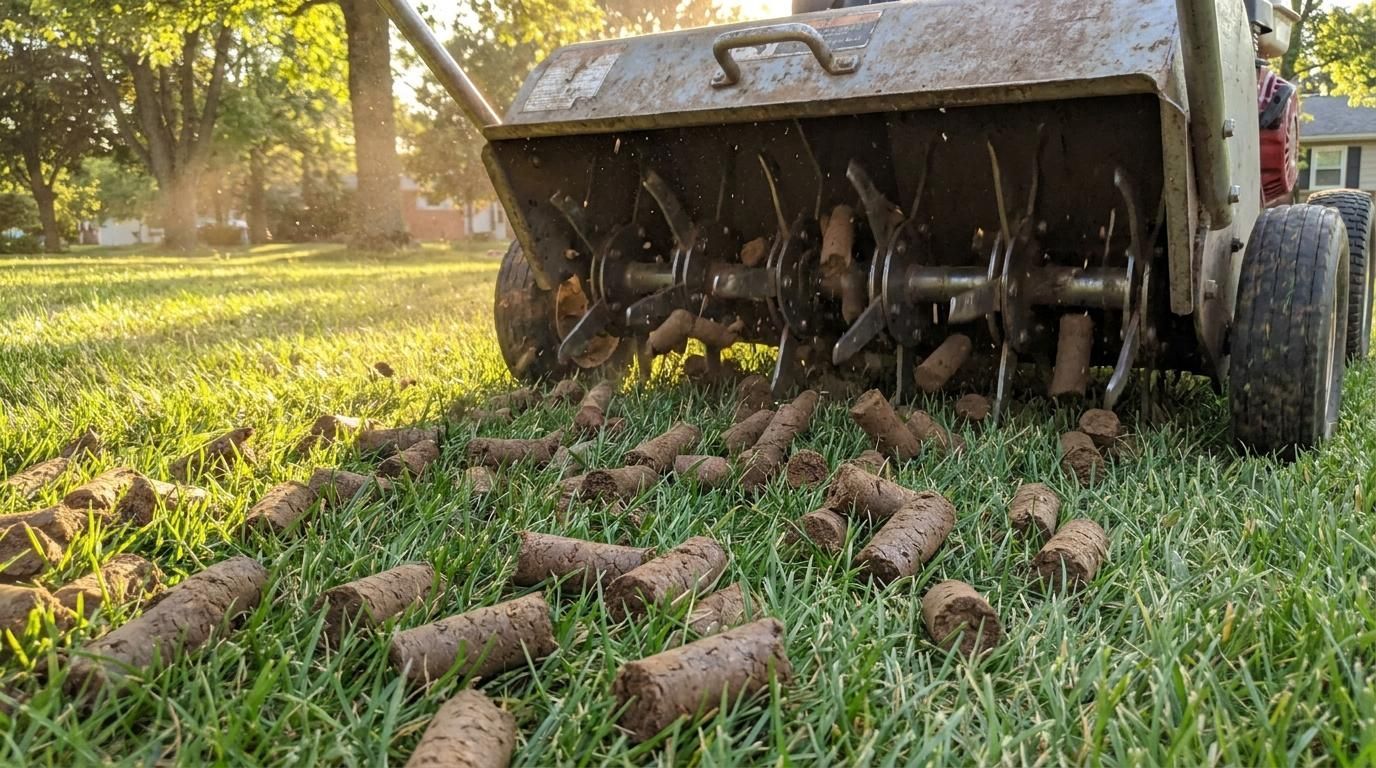
Consider combining fertilizer application with your aeration schedule to maximize seed germination and deep root development.
Frequently Asked Questions
What month should I start fertilizing my lawn in Ohio?
You should start fertilizing your Ohio lawn in late March or early April, paired with a pre-emergent for crabgrass. Soil temperatures need to hit 50 to 55 degrees before the first application, which usually happens in Toledo by the first week of April. Earlier feedings push top growth the roots can't support, and the nutrients leach away before the grass can use them.
How often should you fertilize your lawn in Ohio?
You should fertilize an Ohio cool-season lawn four to five times per year, with the heaviest applications in spring and fall and a light summer feed only on irrigated yards. The five-step calendar runs early April, late May, optional late July, late August or early September, and a mid-October winterizer. Skip the summer feeding on unirrigated lawns to avoid burning dormant turf.
Is it too late to fertilize my lawn in June?
June fertilizing works through about the 15th, after which soil temperatures climb past the cool-season comfort zone and feedings stress the grass. If you missed the May window, apply a light slow-release feed in the first two weeks of June and then hold off until the late-August recovery application. Anything fed into a July or early-August lawn risks burn on Ohio clay.
Set the Calendar Once and Stop Guessing at the Bag
Five applications spaced four to six weeks apart, and one rule: soil temperature beats the date on the bag. Northwest Ohio lawns hold their best color when the feedings line up with active cool-season growth in April, May, late August, September, and October. The summer feeding is optional and only safe on irrigated yards.
If you'd rather have someone build the schedule around your soil test and your lawn, request a free lawn-care consultation or call (419) 574-6136. We'll line the feedings up with mowing, dethatching, and the aeration window.