Best Grass Seed for Ohio: What Grows Strongest in Northwest Ohio

Nate Stuckey • May 29, 2026

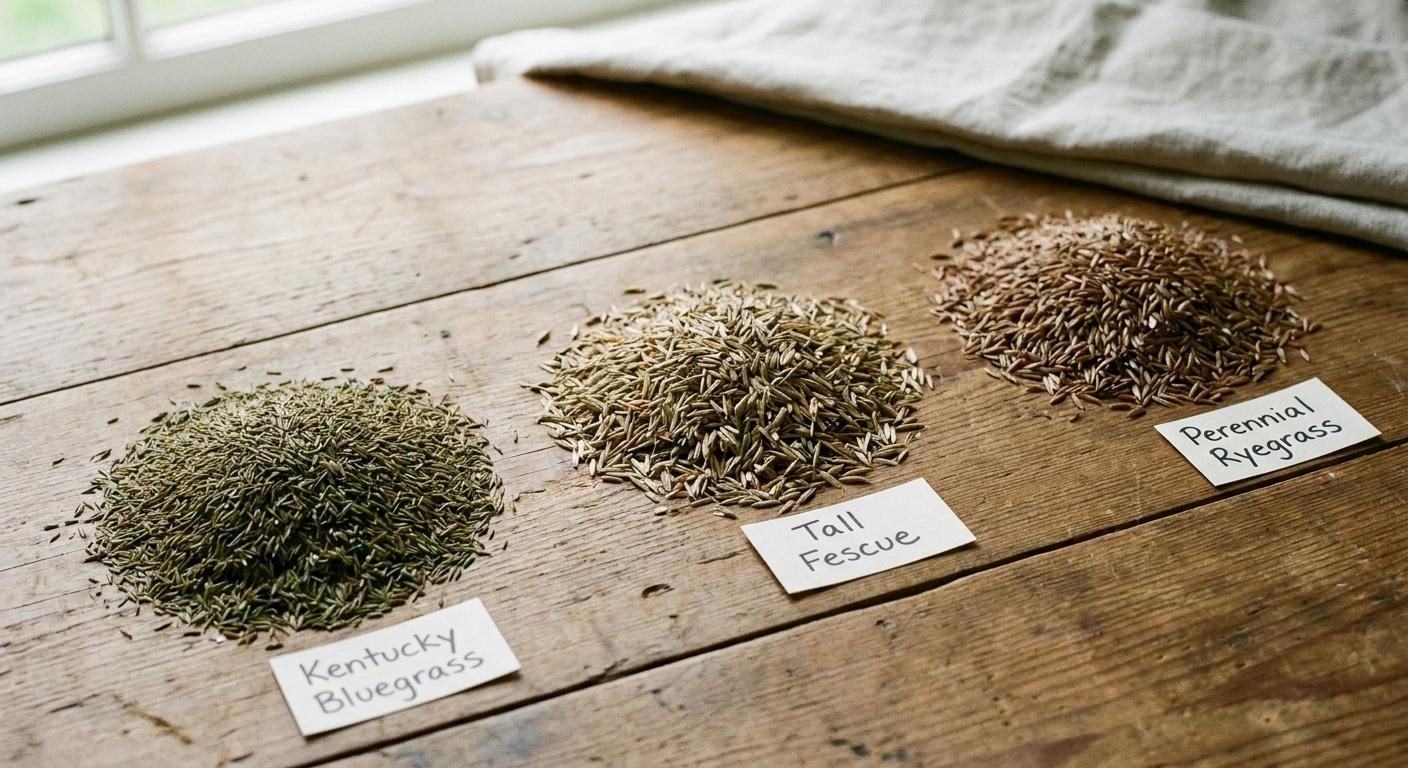
The best grass seed for Ohio lawns is a cool-season blend built around Kentucky bluegrass, tall fescue, and perennial ryegrass. Kentucky bluegrass wins on appearance and self-repair through underground stems called rhizomes, but it needs six or more hours of direct sun. Tall fescue wins on durability and drought tolerance and handles partial shade better than bluegrass. Perennial ryegrass germinates in 5 to 10 days, which makes it the fastest option for overseeding and quick cover. Most successful Ohio lawns use a two- or three-species blend matched to the area’s sun exposure and foot traffic.

Stuckey's Curb & Landscape handles overseeding and lawn restoration across Toledo, Holland, Sylvania, and northwest Ohio. The following sections explore each of the three main grass species in detail, the three blends that match common conditions in northwest Ohio yards, and the late-August-through-mid-September seeding window that gives the strongest results.

Kentucky Bluegrass

Kentucky bluegrass is the most popular lawn grass across Ohio and the standard for dense, fine-textured turf. It spreads through underground stems called rhizomes, which allow it to fill in bare spots and recover from moderate damage on its own.

Strengths

Dense growth habit, self-repairing through rhizome spread, and a deep green color that holds through the growing season. It handles cold Ohio winters well and bounces back quickly from spring green-up.

Weaknesses

Requires full to partial sun and struggles in heavy shade. It has a higher water demand than fescue and goes dormant faster during summer drought. Germination is slow at 14 to 21 days, which means bare spots take longer to fill in from seed.

Best For

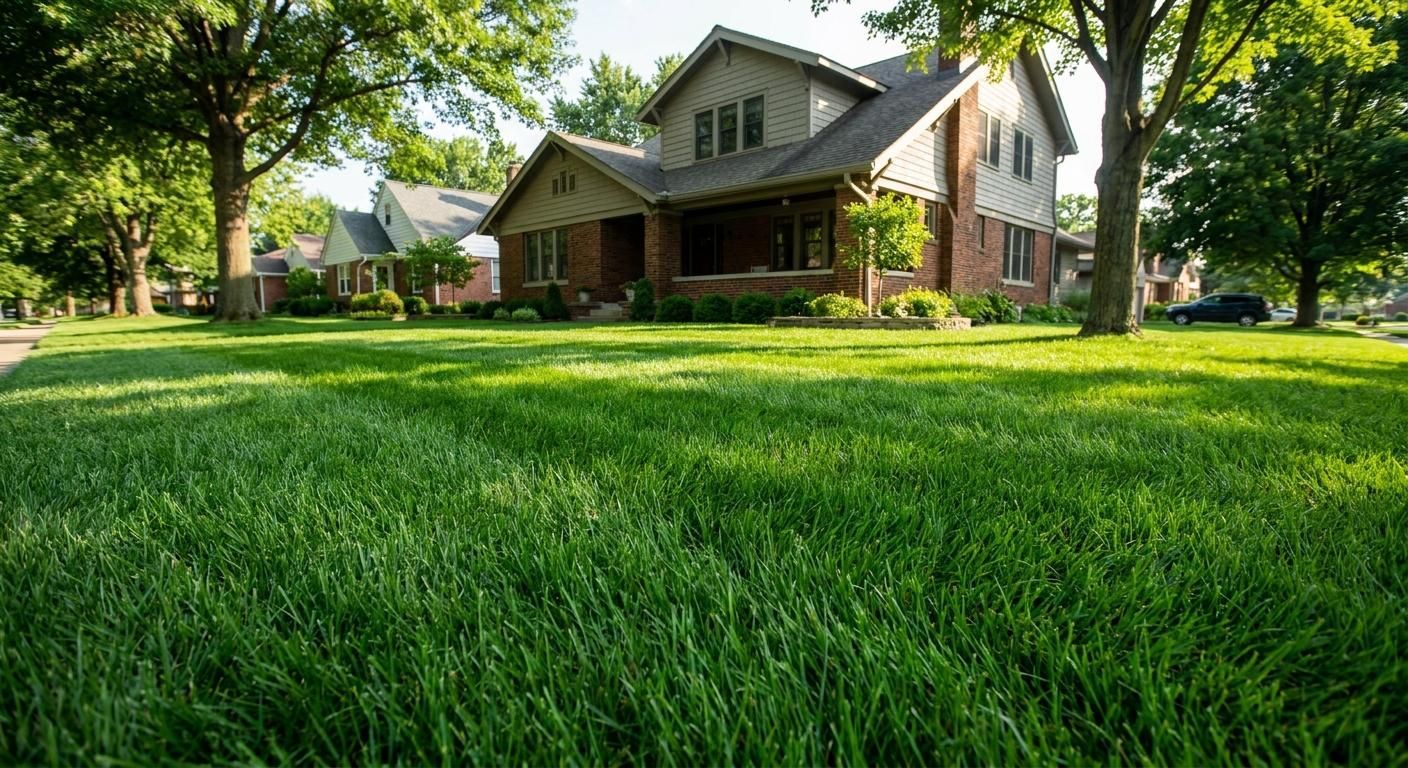
Front yards with six or more hours of direct sun, showcase lawns where appearance is the priority, and properties where the homeowner waters regularly through dry stretches.

Tall Fescue

Tall fescue is the workhorse grass for Ohio yards that need durability over visual perfection. Its deep root system gives it better drought tolerance than bluegrass, and it handles heat stress more gracefully during Toledo's July and August stretches.

Strengths

Deep roots that reach moisture other grasses cannot access. Tolerates partial shade better than bluegrass. Handles foot traffic, pet use, and play areas without thinning as quickly. Germinates in 7 to 12 days.

Weaknesses

Does not spread through rhizomes, so it cannot self-repair bare spots. The wider blade gives a coarser texture than bluegrass. Older turf-type fescue varieties can look clumpy, though newer cultivars have improved significantly.

Best For

Backyards with kids or dogs, properties with partial shade from mature trees, and homeowners who want a low-maintenance lawn that survives summer heat without heavy irrigation.

Perennial Ryegrass

Perennial ryegrass is the fastest-germinating cool-season grass, making it the go-to for quick cover and overseeding projects. It establishes a visible stand within five to ten days of seeding.

Strengths

Rapid germination, fine texture, and a bright green color. It blends well with bluegrass and fescue in mixed-seed lawns. Strong wear tolerance makes it a solid choice for high-traffic areas.

Weaknesses

Less cold-hardy than bluegrass and can thin out after severe Ohio winters. It does not spread through rhizomes or stolons, so it stays where it was seeded. Requires consistent moisture during establishment.

Best For

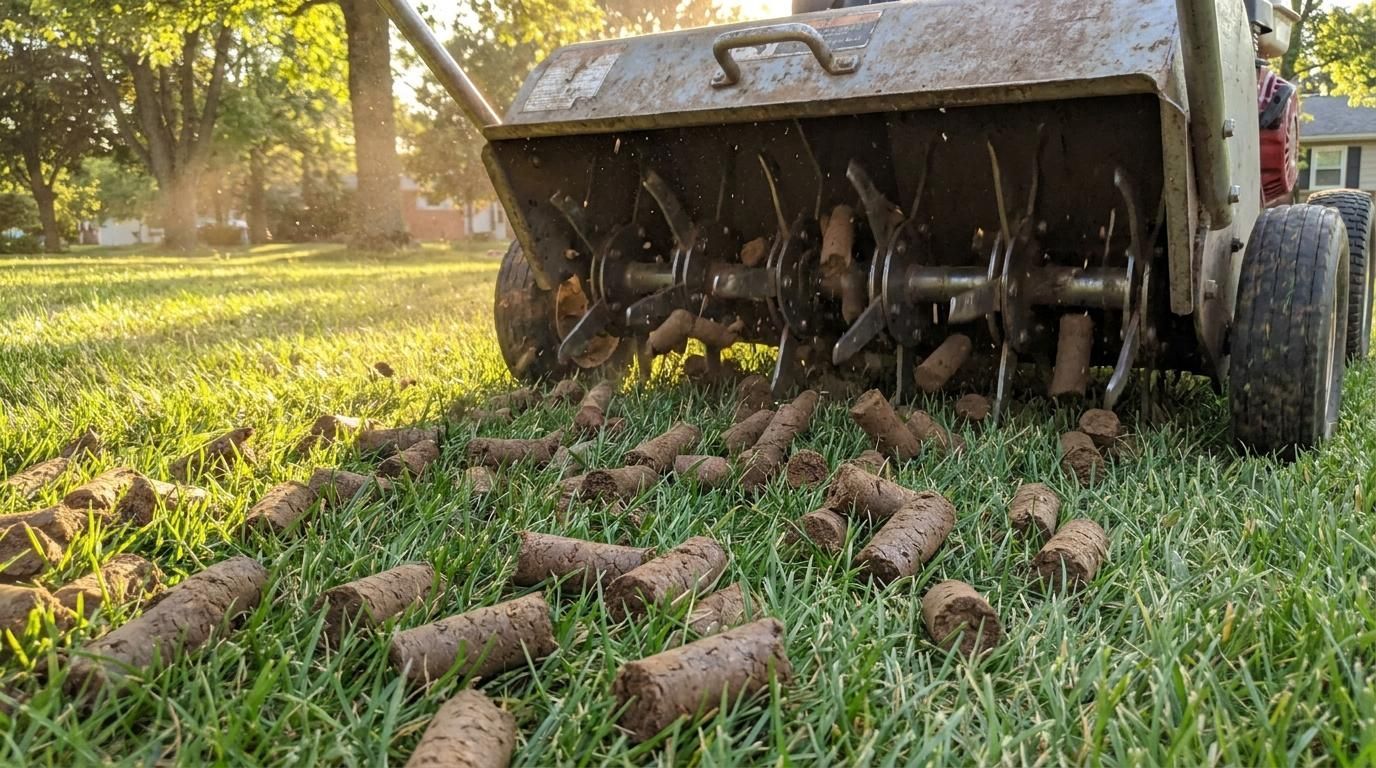
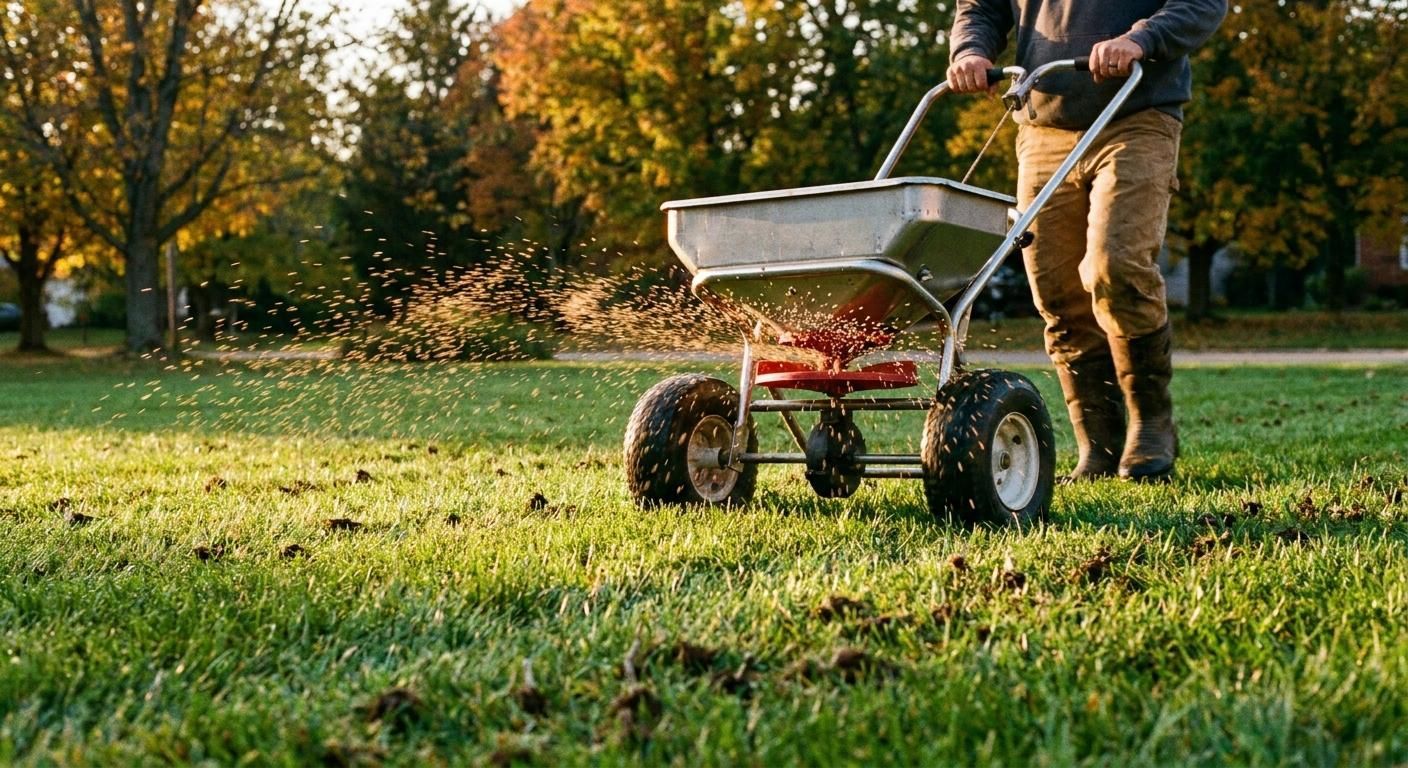
Overseeding into an existing lawn for quick fill, patching bare spots that need fast coverage, and blending with bluegrass to provide early ground cover while the slower bluegrass establishes. Fall aeration and overseeding with a ryegrass-bluegrass blend gives northwest Ohio lawns the fastest path to full coverage.

Choosing the Right Blend for Your Yard

Single-species lawns are rare in Ohio. Most successful turf comes from a blend that plays each species off the others' weaknesses.

Full-Sun Blend

60 to 70 percent Kentucky bluegrass and 30 to 40 percent perennial ryegrass. The bluegrass fills in over time through rhizome spread while the ryegrass germinates fast and holds ground during establishment.

Sun-Shade Mix

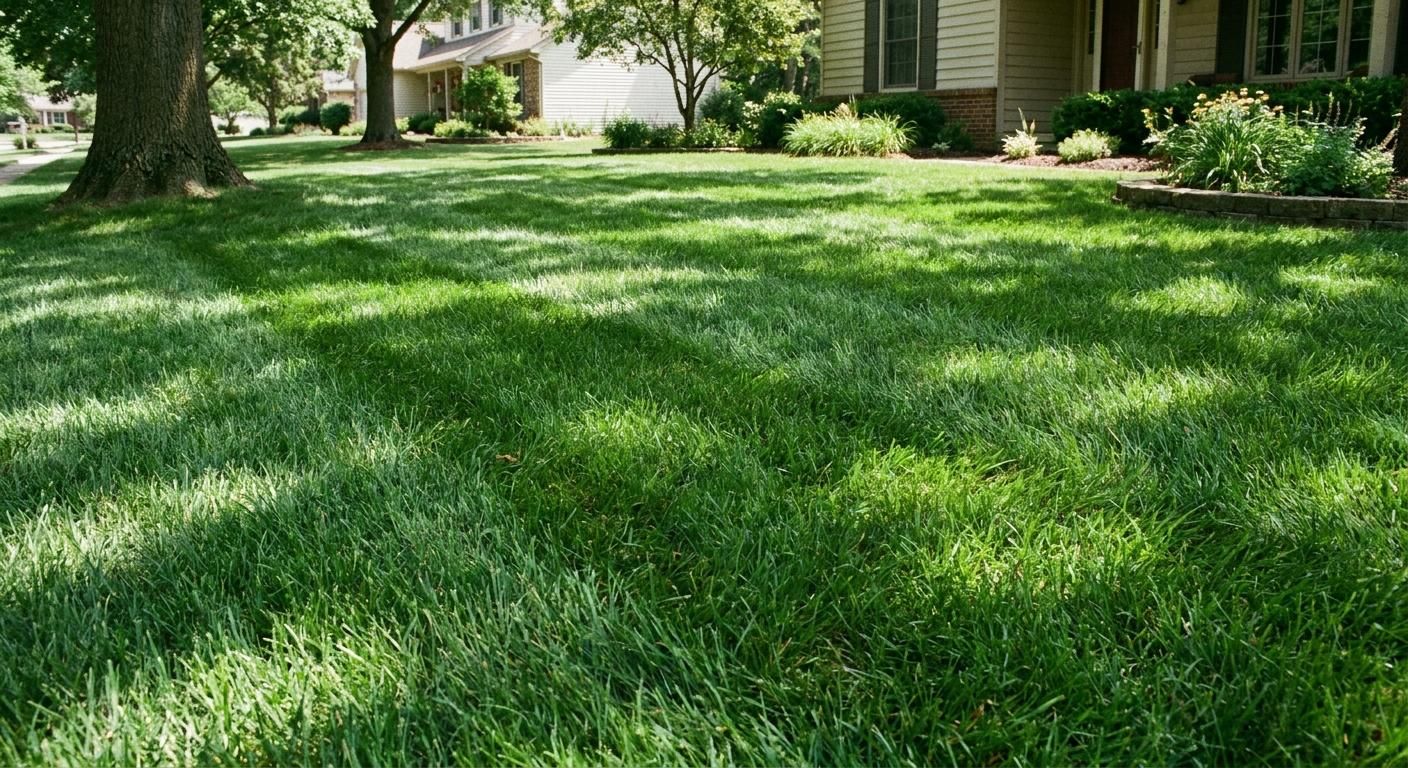
50 percent tall fescue, 30 percent Kentucky bluegrass, and 20 percent perennial ryegrass. This mix covers yards with trees or north-facing slopes where pure bluegrass would thin out.

High-Traffic Blend

60 percent tall fescue and 40 percent perennial ryegrass. Both species handle foot traffic well, and the ryegrass fills in quickly after wear damage. This is the best mix for backyards with heavy pet or play use.

When to Seed

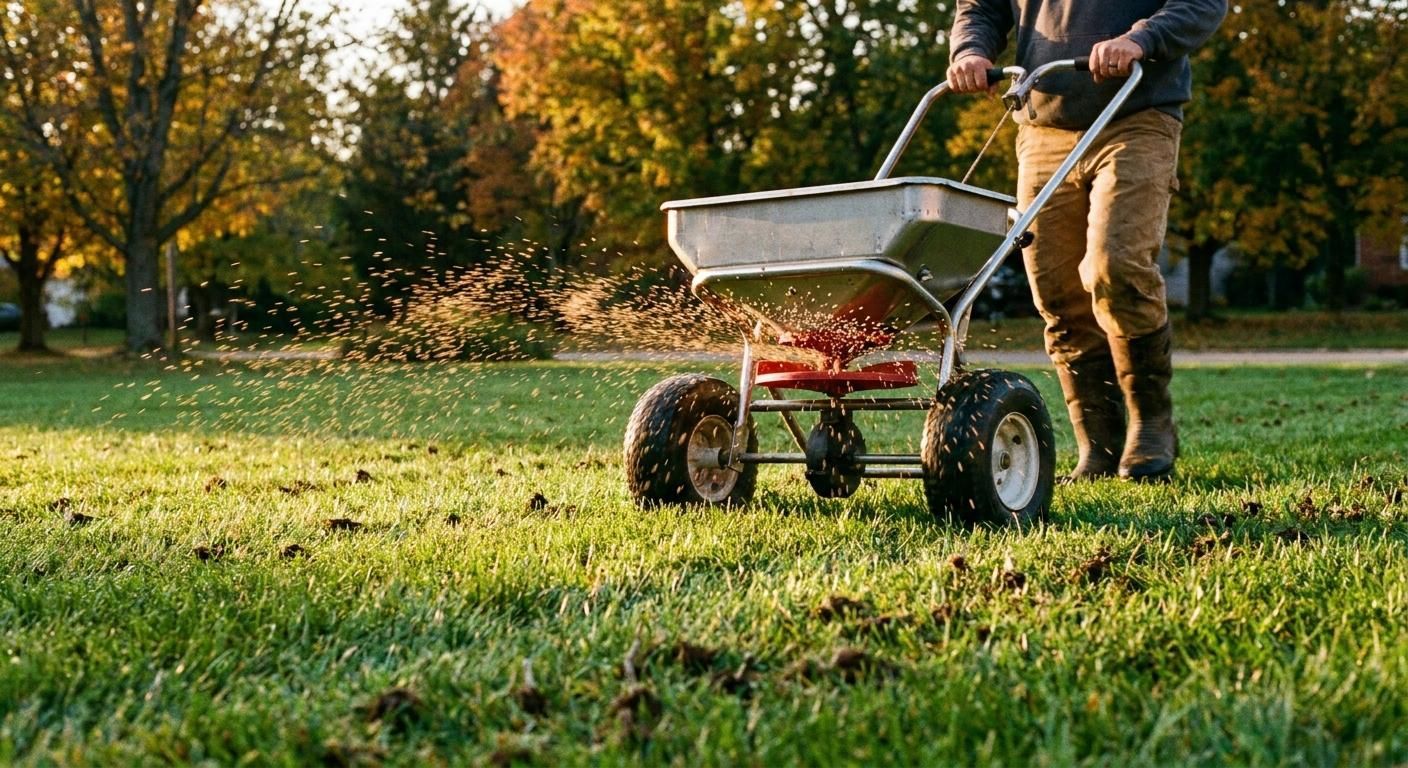
The best seeding window in northwest Ohio is late August through mid-September. Soil temperatures sit in the 50 to 65 degree range, fall rain reduces irrigation needs, and weed pressure drops. Spring seeding works but requires more attention to weed control. A complete spring lawn care schedule helps sequence seeding around pre-emergent herbicide timing.

Frequently Asked Questions

What grass stays green all year in Ohio?

No cool-season grass stays fully green all year in Ohio. Kentucky bluegrass and tall fescue hold their color the longest but go dormant and brown during deep winter and extended summer drought. Consistent fall fertilization and a higher mowing height (3 to 3.5 inches) give the longest green season for most northwest Ohio lawns.

Can you mix Kentucky bluegrass and tall fescue?

You can mix Kentucky bluegrass and tall fescue for a combination works well for yards with both sun and shade. The bluegrass fills sunny areas through rhizome spread while the fescue holds its own in shadier spots and high-traffic zones. Use a blend with at least 30% fescue if any part of the lawn gets less than four hours of direct sun per day.

How much grass seed do I need per 1,000 square feet?

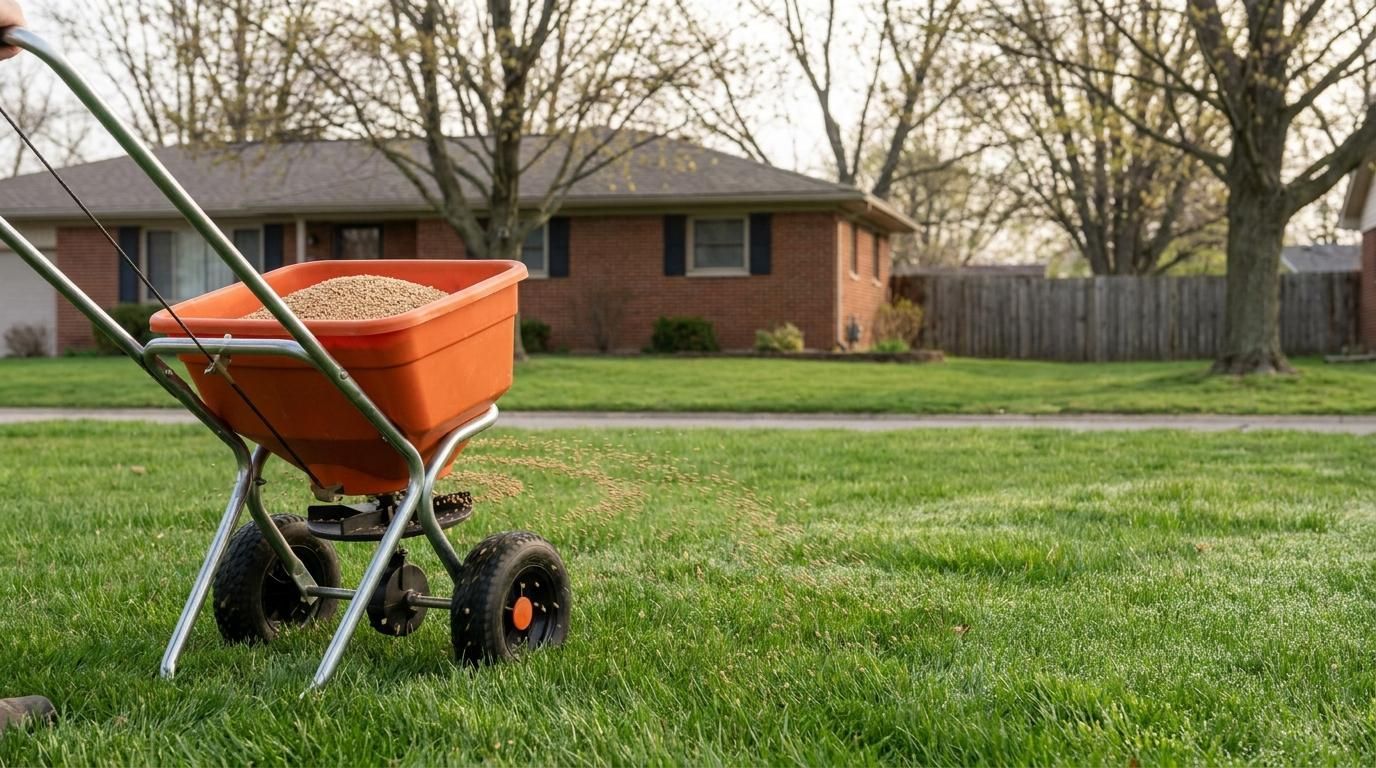
The amount of grass seed you need for 1,000 square feet depends on the type and whether you're starting a new lawn or overseeding. New lawns need 3 to 5 pounds of seed per 1,000 square feet for bluegrass blends and 8 to 10 pounds for fescue blends. Overseeding rates are roughly half that: 3 to 4 pounds for bluegrass and 4 to 5 pounds for fescue.

Pick the Seed That Matches Your Yard

The best grass seed for an Ohio lawn depends on sun exposure, traffic level, and how much maintenance you want to commit to. Kentucky bluegrass wins on appearance, tall fescue wins on durability, and perennial ryegrass wins on speed. Blending two or three together gives you the strongest turf for northwest Ohio conditions.

For professional overseeding, lawn restoration, or a free seed recommendation in Toledo, Holland, Sylvania, Maumee, or Perrysburg, contact Stuckey’s Curb & Landscape at (419) 356-3648.

Common causes of bare spots in Ohio lawns
By Nate Stuckey May 25, 2026
Learn how to fix bare spots on your lawn step by step. Stuckey’s discusses the causes, soil prep, seeding, watering, and when to call a pro in northwest Ohio.
Decorative concrete curbing flower bed edging
By Nate Stuckey May 21, 2026
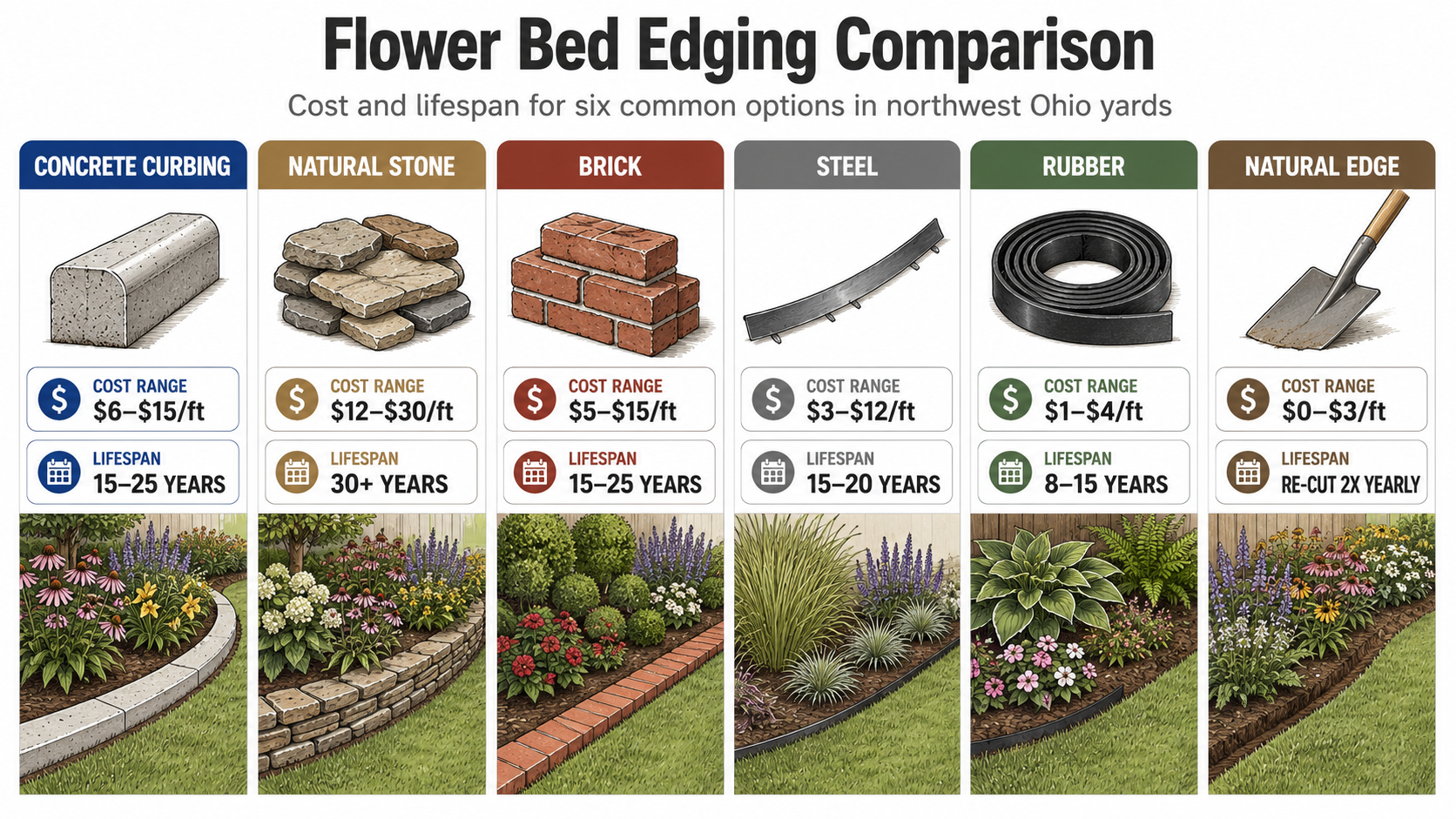
Explore 6 flower bed edging ideas compared by cost, lifespan, and maintenance. Consider concrete curbing, stone, brick, steel, rubber, & natural edges in Ohio.
Average bush trimming cost in northwest Ohio
By Nate Stuckey May 18, 2026
Learn the Bush Trimming Cost in Ohio for 2026, including per-bush rates, hourly pricing, what affects the price, & when to schedule trimming in northwest Ohio.
What thatch is and why it builds up
By Nate Stuckey May 15, 2026
Learn what lawn dethatching is, why Toledo lawns need it once thatch passes half an inch, and the best time to schedule it for fast recovery in northwest Ohio.
What mulch costs before delivery in Toledo
By Nate Stuckey May 10, 2026
See the mulch delivery cost in Toledo for 2026, including the pricing by mulch type, delivery fees, bulk vs. bagged comparison, and estimating your total.
The one-third rule every Ohio lawn needs
By Nate Stuckey May 6, 2026
Find out how often to mow your lawn in northwest Ohio by season. Covers spring, summer, & fall mowing frequency, the one-third rule, and ideal cutting heights.
Pruning spring-blooming shrubs right after flowering
By Nate Stuckey May 2, 2026
Learn when to trim bushes and shrubs in Ohio by plant species. Get Stuckey’s seasonal pruning calendar for boxwood, hydrangea, lilac, and more.
Single-story house with a manicured lawn and curved flower bed in front
By Nate Stuckey April 29, 2026
Compare 7 landscape edging options for Ohio yards: concrete curbing, steel, plastic, stone, brick, trench, and rubber. Ranked by durability, cost, and style.
Mulched garden bed with colorful flowers along a curved lawn beside a house
By Nate Stuckey April 21, 2026
Compare the 5 best mulch types for NW Ohio flower beds: hardwood, cedar, cypress, pine bark, and rubber. Local pros, cons, and pricing for Toledo-area yards.
Person operating a red lawn aerator on a grassy suburban lawn, with soil plugs scattered behind.
By Nate Stuckey April 15, 2026
Dethatching removes dead buildup while aerating loosens compacted soil. Learn which your NW Ohio lawn needs, when to schedule each, and when you need both.
Show More