What Is Lawn Dethatching? Why Toledo Homeowners Need It and When to Do It

Nate Stuckey • May 15, 2026

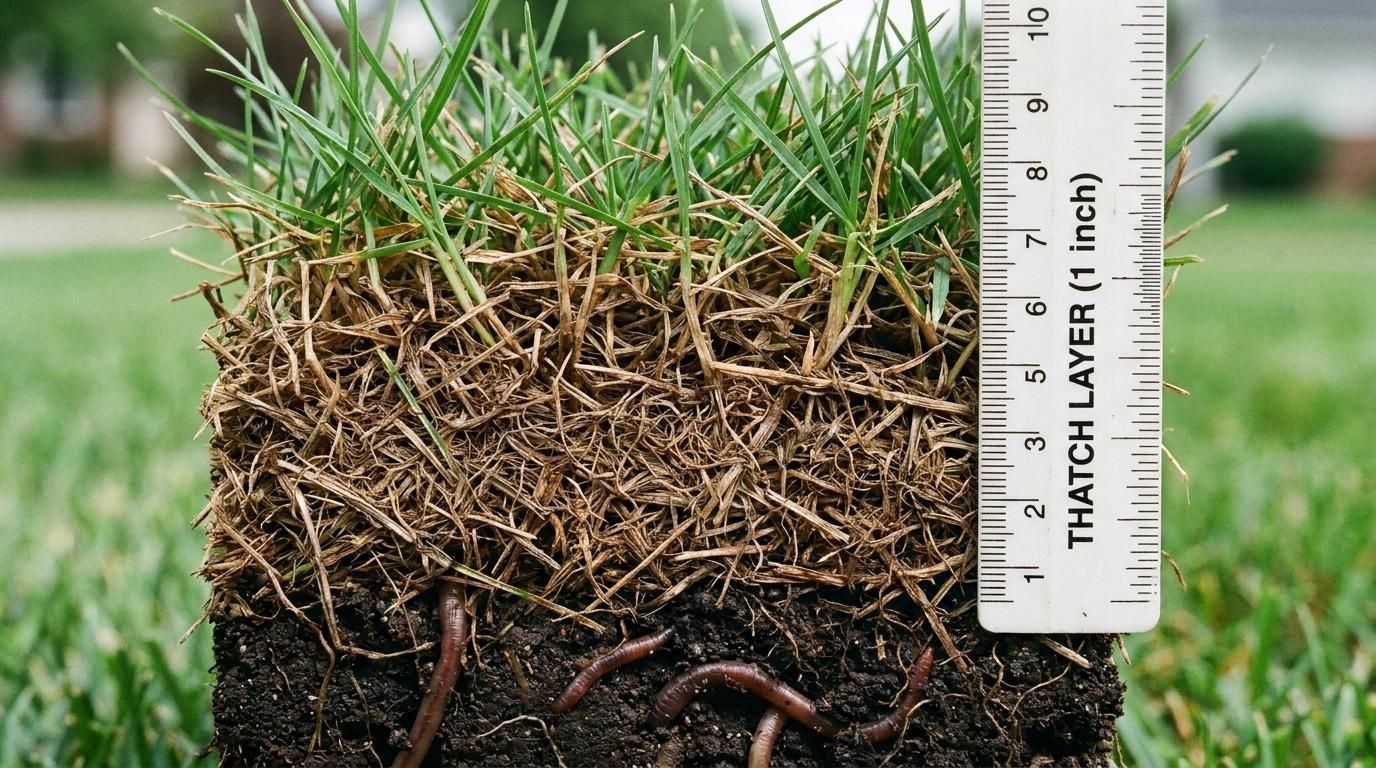
Lawn dethatching is the removal of the dense mat of dead grass, stems, and roots that builds up between the soil and the green blades you see. Once that thatch layer passes half an inch in thickness, it blocks water, air, and nutrients from reaching the soil. Lawns with Kentucky bluegrass cross that threshold faster than most cool-season grasses common in northwest Ohio. The best time to dethatch in Ohio is late August through September, when the grass is actively growing and fall rain helps it recover.

Stuckey's Curb & Landscape handles dethatching for residential lawns across Toledo and northwest Ohio. This article explains what thatch actually is and why it builds up, the three signs that tell you your lawn has crossed the half-inch tipping point, and the right seasonal window for dethatching in northwest Ohio.

What Thatch Is and Why It Builds Up

Thatch is a tightly woven mat of dead and living grass stems, crowns, and roots that sits between the soil and the green blades you see. A thin layer—about a quarter inch—actually helps the lawn. It insulates roots, retains moisture, and cushions foot traffic.

Problems start when thatch grows thicker than half an inch. At that point it repels water instead of holding it, blocks fertilizer from reaching the soil, and creates a breeding ground for fungal disease. Cool-season grasses common in northwest Ohio, especially Kentucky bluegrass, build thatch faster than tall fescue because bluegrass spreads through underground stems called rhizomes.

Signs Your Lawn Needs Dethatching

Knowing when to dethatch starts with recognizing what excess thatch looks and feels like. These are the most common signs Toledo-area homeowners notice, and they’re part of a complete lawn maintenance checkup.

Spongy Feel Underfoot

Walk across your lawn in the morning. If the ground feels soft and bouncy rather than firm, thatch is likely thicker than half an inch. The spongy layer absorbs your step instead of letting you feel solid soil underneath.

Water Runs Off Instead of Soaking In

Thick thatch becomes hydrophobic. Sprinkler water beads up and rolls off instead of penetrating to the root zone. You’ll notice dry spots even after a full watering cycle.

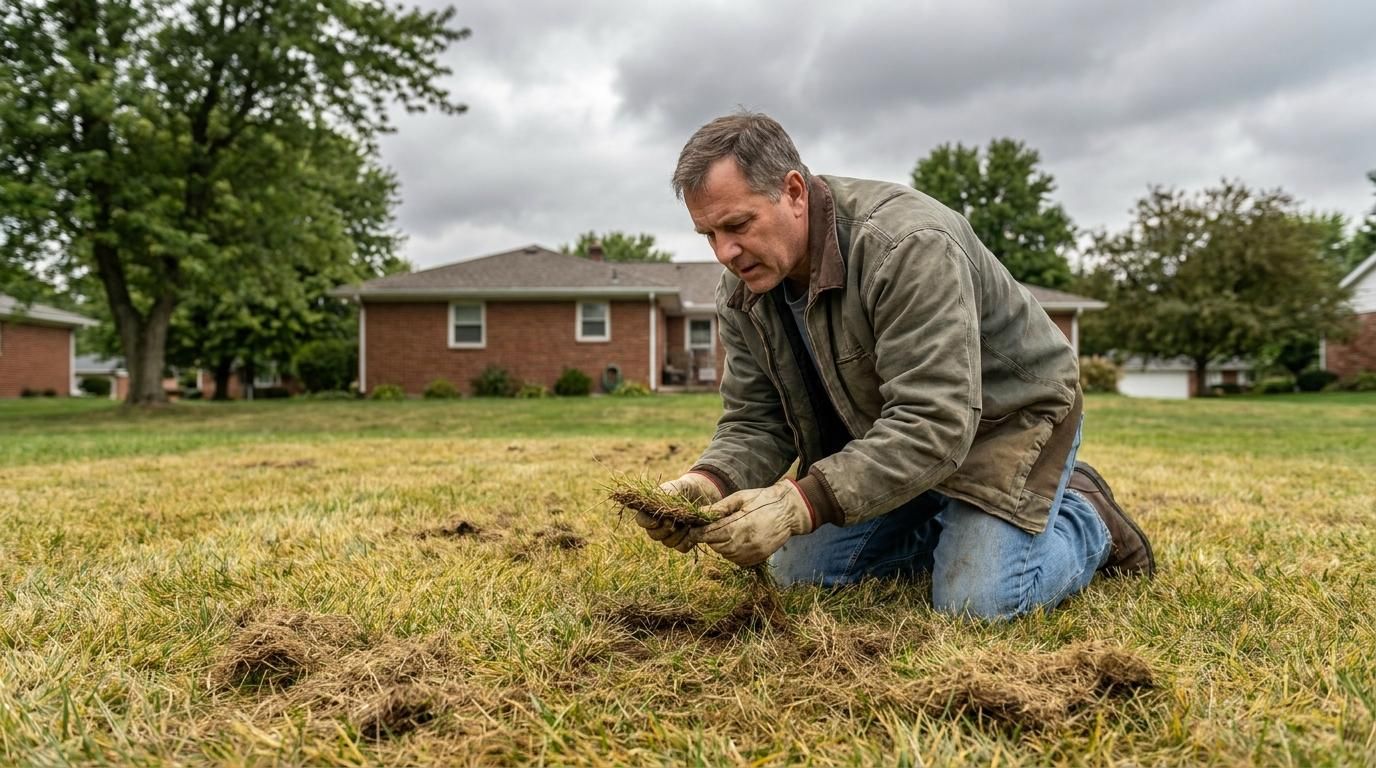
Thinning Grass and Brown Patches

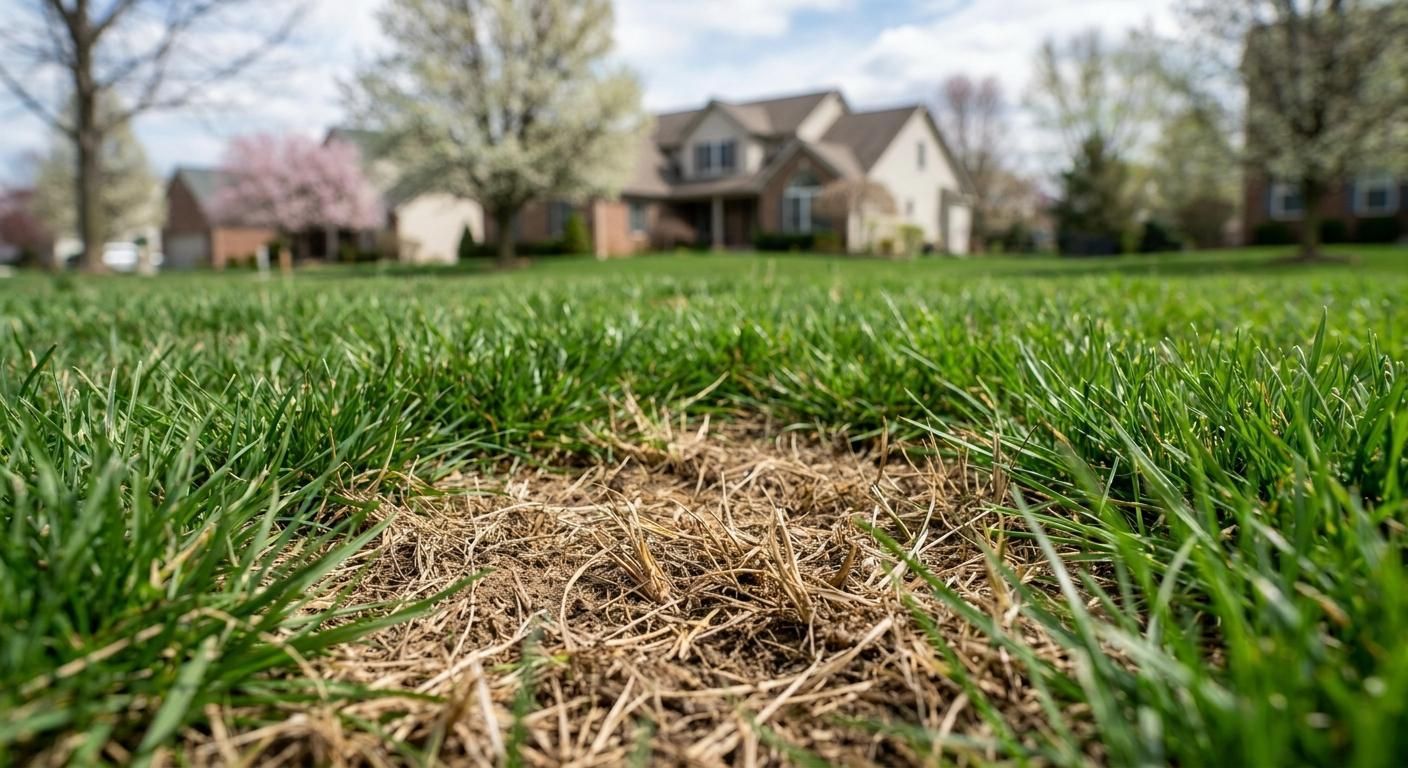
When roots can’t access nutrients through the thatch barrier, grass thins out and develops brown patches that don’t green up with watering. This is often confused with grub damage or drought stress, but a quick check of the thatch layer tells you which problem you’re dealing with.

When to Dethatch in Northwest Ohio

Late Summer Through Early Fall

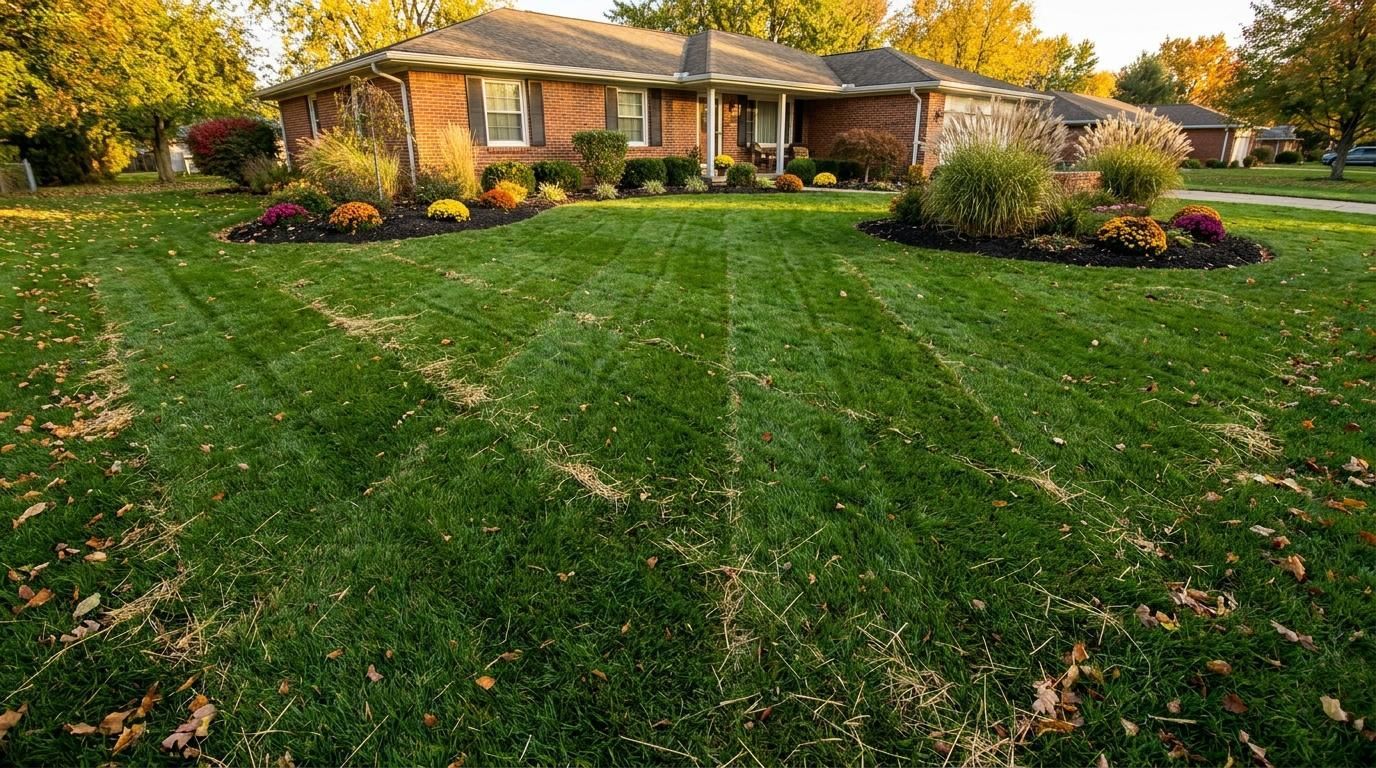
The best time to dethatch cool-season lawns in Ohio is late August through September. The grass is actively growing, temperatures are dropping, and fall rain helps the lawn recover quickly after the process.

Spring Dethatching

Spring dethatching is possible but riskier. The lawn is still recovering from winter dormancy, and tearing into it too early can set back growth right before summer heat arrives. If you do dethatch in spring, wait until the grass has been actively growing for at least three to four weeks. That timing fits into a broader spring lawn care schedule that starts with soil temperature checks before any heavy work.

How Power Raking Works

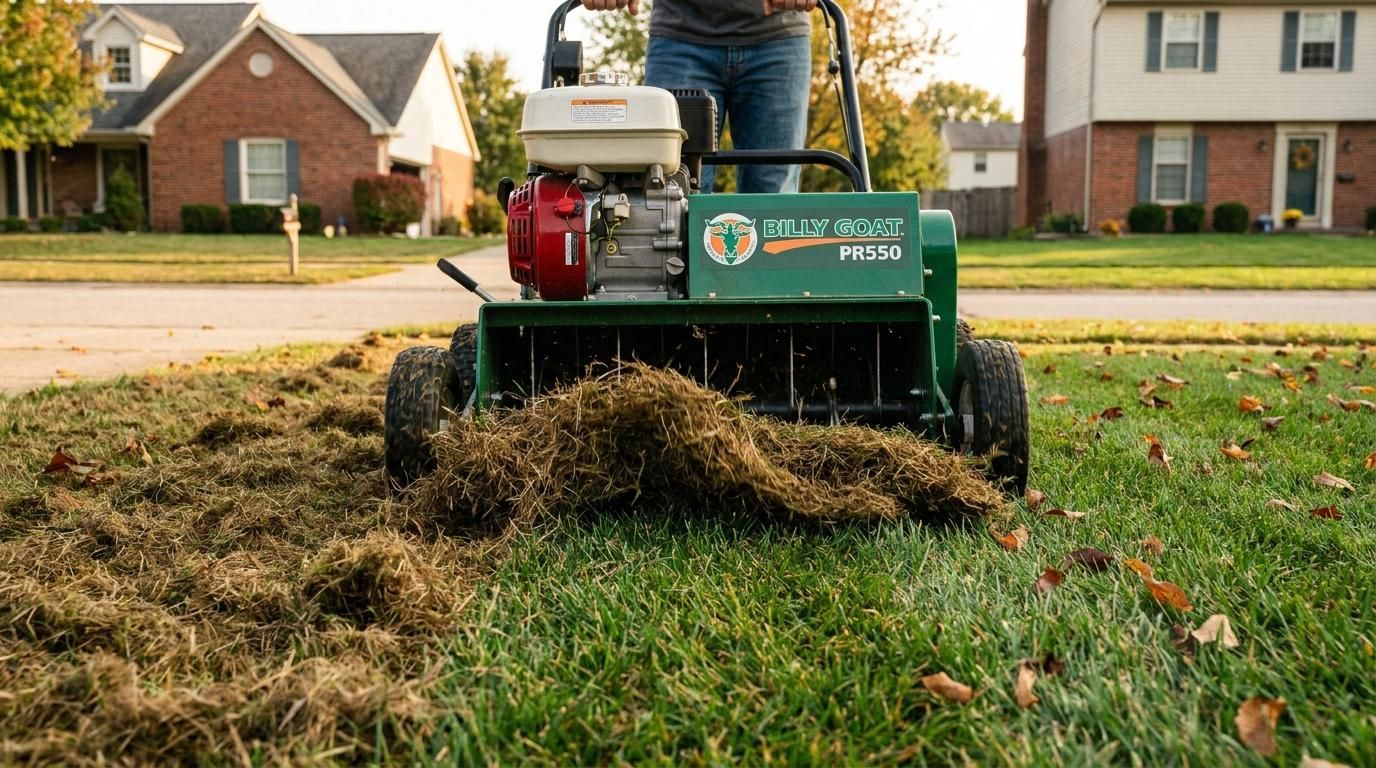
Power raking is the standard professional method. A power rake uses spinning vertical blades to slice through the thatch layer and pull debris to the surface. For lawns with moderate buildup, one pass is usually enough. Severe thatch may need two passes in different directions followed by overseeding to fill in the gaps.

Frequently Asked Questions

Is dethatching good or bad for your lawn?

Dethatching is beneficial when the thatch layer exceeds half an inch and is actively blocking water and nutrients. Done at the right time, it opens the soil to air and moisture and encourages stronger root growth. Done at the wrong time or on a thin thatch layer, it can stress the grass unnecessarily.

How do I know if my lawn needs dethatching?

Push a screwdriver or pencil into the turf. If you feel a dense, spongy layer between the green grass and the soil that measures more than half an inch, dethatching is overdue. Stuckey’s Curb & Landscape can check your thatch depth during a free site estimate.

Can you dethatch and aerate at the same time?

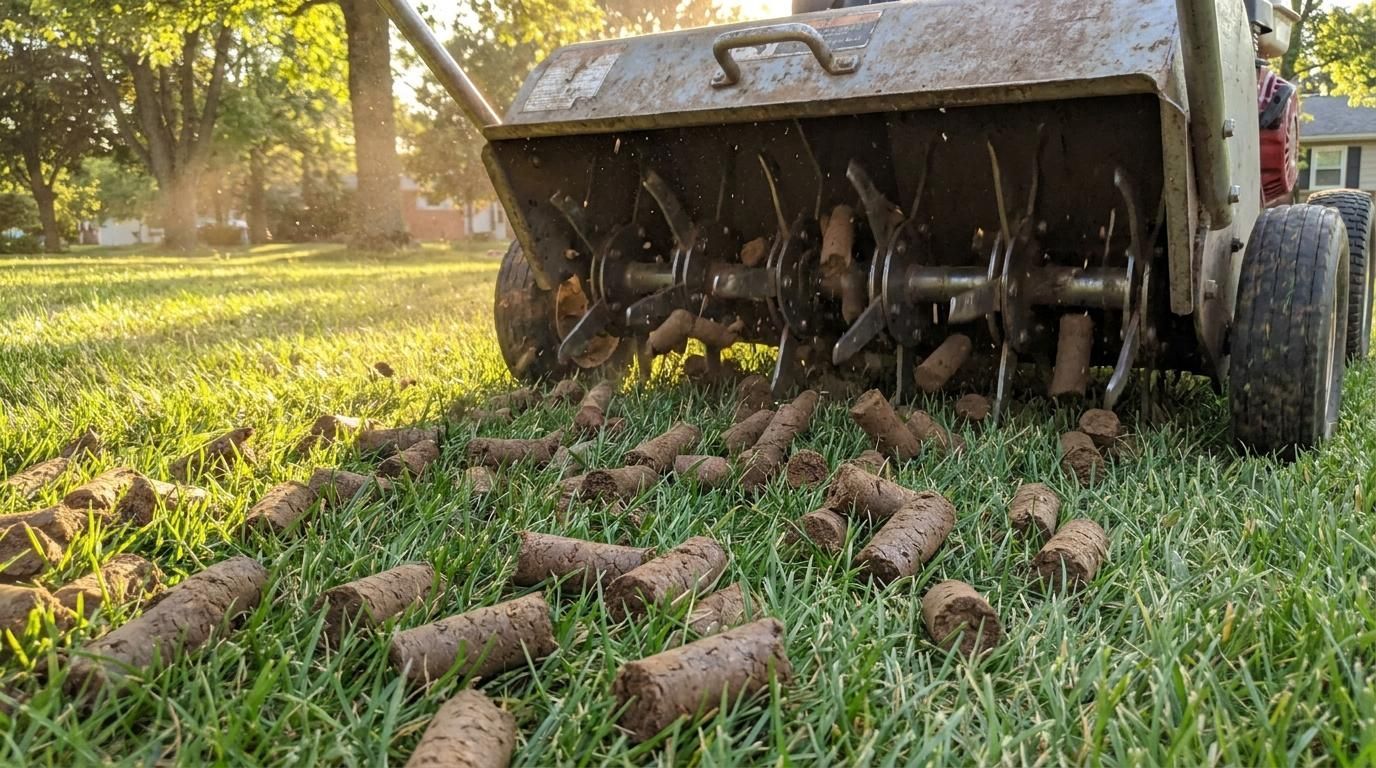
Yes, and the combination works well in early fall. Dethatch first to remove the buildup, then aerate to open the soil beneath. Overseeding right after both treatments gives new grass seed direct contact with loose soil, which improves germination rates significantly.

Give Your Lawn Room to Breathe

The half-inch rule is the one number every Toledo lawn owner should know. Thatch thinner than that protects roots and cushions foot traffic, but once it grows past that thickness, it starves the grass of water, air, and nutrients. Within a single season, the lawn starts to show signs: spongy footing in the morning, runoff after watering, and brown patches that won't green up no matter how much you water them. Checking the thatch depth once a year keeps you ahead of the problem. Late August through September is the safe dethatching window in northwest Ohio, before the lawn goes dormant for winter.

Stuckey's Curb & Landscape handles dethatching across Toledo, Holland, Sylvania, Maumee, and Perrysburg. Contact us at (419) 356-3648 for a free estimate. We measure the thatch depth before recommending the work, so the lawn only gets dethatched when it actually needs it.

Kentucky bluegrass close up
By Nate Stuckey May 29, 2026
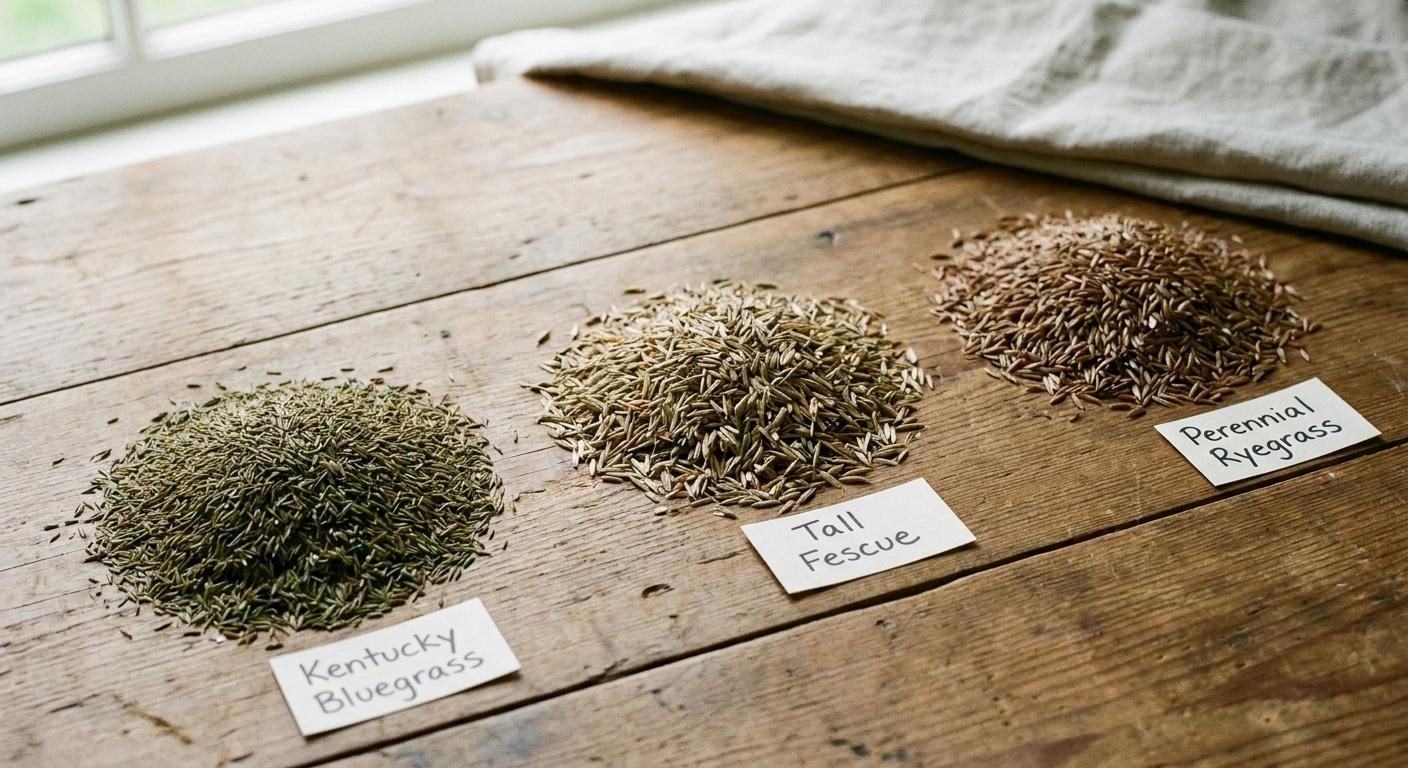
Discover the best grass seed for Ohio lawns. Weigh Kentucky bluegrass, tall fescue, perennial ryegrass, and the right blends for sun, shade, and high traffic.
Common causes of bare spots in Ohio lawns
By Nate Stuckey May 25, 2026
Learn how to fix bare spots on your lawn step by step. Stuckey’s discusses the causes, soil prep, seeding, watering, and when to call a pro in northwest Ohio.
Decorative concrete curbing flower bed edging
By Nate Stuckey May 21, 2026
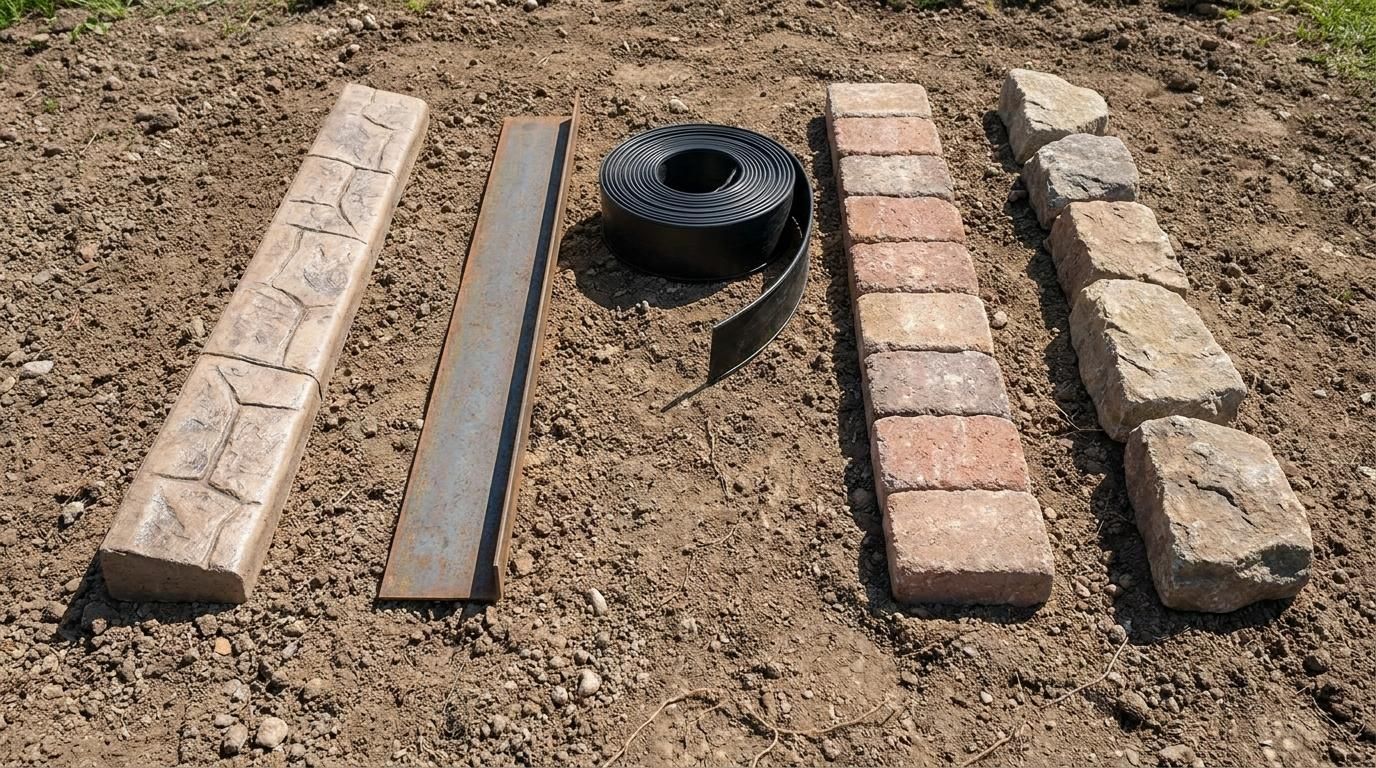
Explore 6 flower bed edging ideas compared by cost, lifespan, and maintenance. Consider concrete curbing, stone, brick, steel, rubber, & natural edges in Ohio.
Average bush trimming cost in northwest Ohio
By Nate Stuckey May 18, 2026
Learn the Bush Trimming Cost in Ohio for 2026, including per-bush rates, hourly pricing, what affects the price, & when to schedule trimming in northwest Ohio.
What mulch costs before delivery in Toledo
By Nate Stuckey May 10, 2026
See the mulch delivery cost in Toledo for 2026, including the pricing by mulch type, delivery fees, bulk vs. bagged comparison, and estimating your total.
The one-third rule every Ohio lawn needs
By Nate Stuckey May 6, 2026
Find out how often to mow your lawn in northwest Ohio by season. Covers spring, summer, & fall mowing frequency, the one-third rule, and ideal cutting heights.
Pruning spring-blooming shrubs right after flowering
By Nate Stuckey May 2, 2026
Learn when to trim bushes and shrubs in Ohio by plant species. Get Stuckey’s seasonal pruning calendar for boxwood, hydrangea, lilac, and more.
Single-story house with a manicured lawn and curved flower bed in front
By Nate Stuckey April 29, 2026
Compare 7 landscape edging options for Ohio yards: concrete curbing, steel, plastic, stone, brick, trench, and rubber. Ranked by durability, cost, and style.
Mulched garden bed with colorful flowers along a curved lawn beside a house
By Nate Stuckey April 21, 2026
Compare the 5 best mulch types for NW Ohio flower beds: hardwood, cedar, cypress, pine bark, and rubber. Local pros, cons, and pricing for Toledo-area yards.
Person operating a red lawn aerator on a grassy suburban lawn, with soil plugs scattered behind.
By Nate Stuckey April 15, 2026
Dethatching removes dead buildup while aerating loosens compacted soil. Learn which your NW Ohio lawn needs, when to schedule each, and when you need both.
Show More